The Book of Esther Explained: A Jewish Queen in the Persian Court
In 474 BC, the queen of Persia was keeping a secret: she was Jewish. A law sealed with the king’s ring had just gone out to all 127 provinces, ordering every Jew in the empire killed on one day. The book that tells her story never once names God. So where is He in it?
The Book of Esther, walked through on the map table: Xerxes, the king the Greeks knew from Thermopylae and Salamis; the Persian couriers Greek history admired, carrying a death sentence and then a rescue; the three-day fast at the book’s center; the night the king couldn’t sleep; and Purim, still kept today.
Fair on the debates
Where Christians and scholars differ (here, whether Esther is history or a historical novella, and the Greek additions in Catholic and Orthodox Bibles), we lay out the main views and their reasons. Where the text is silent, we say so and don’t fill the gap.
The devotional for this episode
Why Did Mordecai Give Esther a Question Instead of a Promise?
A slow read of Esther 4:10–17, with questions for your own study and a prayer.
Transcript
Introduction
0:00In the spring of 474 BC, the queen of Persia is keeping a secret. Her name is Esther, and she’s Jewish. Couriers are leaving her palace at Susa with a law sealed with the king’s ring: on one day, eleven months away, every Jew in the empire is to be killed, and everything they own taken. She may be the only person who can stop it. And the book that tells her story never once mentions God by name.
So where is He in it? This is the Book of Esther. By the end, you’ll know three things. Who this king really was: the Greeks called him Xerxes, the king who invaded Greece and lost at Salamis. How the Persian post, the one Greek history admired, carried a death sentence across an empire, and then a rescue. And why the one book that never names God, or even prayer, has a three-day fast at its center.
Susa and the empire
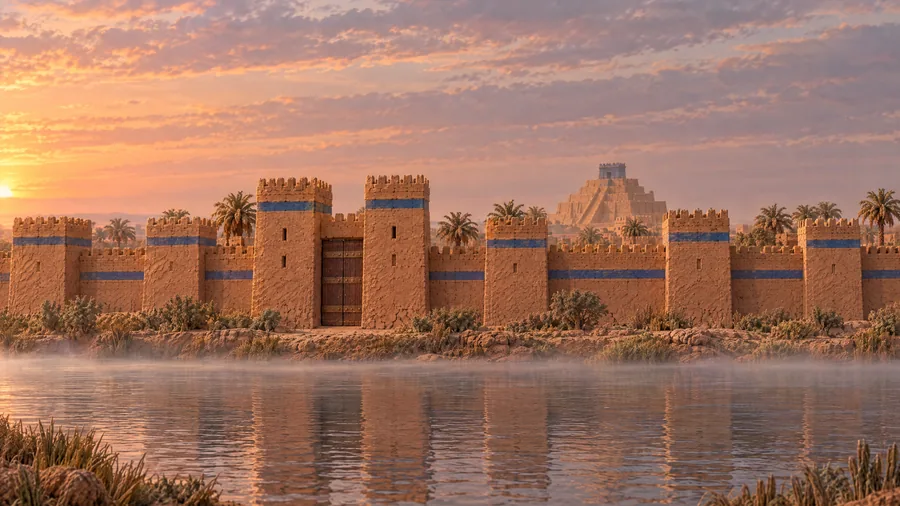
0:57Susa sits on a broad plain at the foot of the Zagros Mountains, in what is now southwest Iran. It was one of the Persian kings’ great capitals. And the empire it governed was the largest the world had yet seen. The book’s first verse says so. “This is what happened in the days of Xerxes, who reigned over 127 provinces from India to Cush.”
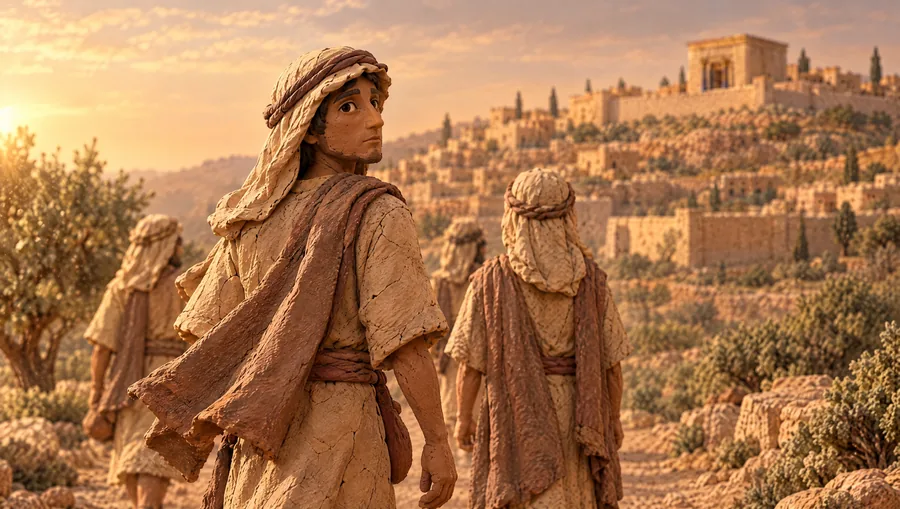
India, along the Indus in the east. Cush, up the Nile beyond Egypt in the south. It’s been about sixty years since Cyrus, the first Persian king, let the exiles of Judah go home. Some went. Most didn’t. Over two or three generations they’d built lives across the empire, in Babylon, in towns along the rivers, and some in Susa itself, in the shadow of the palace.
So this story doesn’t happen in the land of Israel. It happens in the capital of the empire that rules it.
Who’s who
1:56Four people carry this story. Xerxes, the king. The Hebrew text calls him Ahasuerus; it’s the same Persian name, spelled the Hebrew way. Esther, a young Jewish woman. Her Hebrew name is Hadassah, which means myrtle. Mordecai, her older cousin, from the tribe of Benjamin.
His family had been carried into exile from Jerusalem by Nebuchadnezzar, and when Esther’s parents died, he raised her as his own daughter. And Haman, son of Hammedatha, called the Agagite, a royal official on his way up.
A feast and a new queen
2:33The book opens in Xerxes’ third year, around 483 BC, with a feast. A hundred and eighty days of display for his officials, then a seven-day banquet for the whole citadel. On the last day, he sends for Queen Vashti, to show her beauty to his guests. She refuses. The text doesn’t say why, and it doesn’t judge her.
His advisers do, and she’s removed. Then the story skips ahead. When chapter two picks up, it’s the king’s seventh year. Greek history fills the gap. In 480 BC Xerxes led a vast army from Sardis across the Hellespont into Greece. He forced the pass at Thermopylae, burned Athens, and lost his fleet at Salamis.
Back in Susa, young women are gathered from across the provinces for a new queen, and Esther was taken to the palace with them. The text gives her a year of beauty treatments, and no word on her choice. Mordecai had told her not to reveal her people, and she doesn’t. “And the king loved Esther more than all the other women, and she found grace and favor in his sight more than all of the other virgins.
So he placed the royal crown upon her head and made her queen in place of Vashti.” One more thing happens, and it seems small. Mordecai learns of two guards plotting to kill the king. He tells Esther, she tells the king, and it’s written down in the royal records.
Nobody rewards Mordecai. Hold on to that.
The decree
4:08Some years later, the king raises Haman above all the other officials and commands everyone at the king’s gate to bow to him. “All the royal servants at the king’s gate bowed down and paid homage to Haman, because the king had commanded that this be done for him. But Mordecai would not bow down or pay homage.”
The text doesn’t say why. Many readers hear an old story in Haman’s title. Agag was the Amalekite king Saul spared in First Samuel 15, and Saul’s father was named Kish, the same name as Mordecai’s great-grandfather. The book doesn’t say Haman descends from Agag, or that it’s the same Kish. But an ancient reader may have heard the echo.
What the text does say is what Haman did with his anger. “Instead, he sought to destroy all of Mordecai’s people, the Jews, throughout the kingdom of Xerxes.” To choose the day, a lot is cast before him. The book calls it the Pur. It falls on the twelfth month, Adar, eleven months away.
The king hands Haman his signet ring, and the letters go out. “The couriers left, spurred on by the king’s command, and the edict was issued in the citadel of Susa. Then the king and Haman sat down to drink, but the city of Susa was in confusion.” Mordecai tears his clothes, puts on sackcloth and ashes, and cries out in the city, as far as the king’s gate. In every province, Jewish families fast and weep.
Mordecai asks Esther to go to the king. She reminds him of the law: anyone who walks into the inner court uncalled dies, unless the king holds out his gold scepter. And she hasn’t been called in thirty days. Mordecai answers. “Do not imagine that because you are in the king’s palace you alone will escape the fate of all the Jews.”
“For if you remain silent at this time, relief and deliverance for the Jews will arise from another place, but you and your father’s house will perish. And who knows if perhaps you have come to the kingdom for such a time as this?” Esther answers with orders. “Go and assemble all the Jews who can be found in Susa, and fast for me. Do not eat or drink for three days, night or day, and I and my maidens will fast as you do.
After that, I will go to the king, even though it is against the law. And if I perish, I perish!” Three days, no food and no water, for every Jew in Susa. The nearest thing to devotion in the whole story is a fast.
The Hebrew text never mentions prayer, and never names God. Greek translations of Esther add prayers and God’s name, and Catholic and Orthodox Bibles include those additions. We’re reading the Hebrew text. In the rest of the Hebrew Bible, people fast like this before God.
Esther leaves that unsaid, and lets the reader notice.
Before the king
7:08On the third day, Esther puts on her royal robes and stands in the inner court. “As soon as the king saw Queen Esther standing in the court, she found favor in his sight. The king extended the gold scepter in his hand toward Esther, and she approached and touched the tip of the scepter.” He asks what she wants, up to half the kingdom. She asks only that he and Haman come to a banquet she has prepared.
At the banquet he asks again, and she asks them to come back tomorrow. The text doesn’t say why she waits. Haman goes home pleased, until he passes Mordecai at the gate, who still won’t rise or tremble. His wife and friends tell him to set up a pole fifty cubits high, about seventy-five feet, and ask the king in the morning to have Mordecai hanged on it. Many English Bibles call it a gallows; the Hebrew word simply means a tree or a pole.
And then comes the hinge of the whole book. “That night sleep escaped the king; so he ordered the Book of Records, the Chronicles, to be brought in and read to him.” They read the page about the plot Mordecai uncovered, and he was never rewarded. Just then Haman arrives to ask about the pole. The king asks him what should be done for the man the king delights to honor. Haman, sure it’s him, describes a royal robe, a royal horse and a noble leading him through the square.
The king tells him to do it all for Mordecai the Jew. At the second banquet, Esther finally asks. “Queen Esther replied, ‘If I have found favor in your sight, O king, and if it pleases the king, grant me my life as my petition, and the lives of my people as my request.’” The king demands to know who would dare. “Esther replied, ‘The adversary and enemy is this wicked man—Haman!’ And Haman stood in terror before the king and queen.”
Haman is hanged on the pole he set up for Mordecai. The book tells it in one sentence, and so will we.
The reversal and Purim
9:10Haman is gone, but his law isn’t. The book says a law sealed with the king’s ring can’t be revoked. If you watched our episode on Daniel, you’ve heard this before: Daniel’s enemies counted on it too. “Therefore, O king, establish the decree and sign the document so that it cannot be changed—in accordance with the law of the Medes and Persians, which cannot be repealed.”
So the king gives Mordecai his signet ring and lets him write a second law in the king’s name. This time the couriers ride. “Mordecai wrote in the name of King Xerxes and sealed it with the royal signet ring. He sent the documents by mounted couriers riding on swift horses bred from the royal mares.”
The new law answers Haman’s in his own words. “By these letters the king permitted the Jews in each and every city the right to assemble and defend themselves, to destroy, kill, and annihilate all the forces of any people or province hostile to them, including women and children, and to plunder their possessions.”
Readers take that phrase about women and children two ways: as the attackers’ families, or as the Jews’ own families being defended. Mordecai leaves the palace in royal blue and white, with a gold crown, and the city of Susa shouts for joy.
Then the day comes. “On the thirteenth day of the twelfth month, the month of Adar, the king’s command and edict were to be executed. On this day the enemies of the Jews had hoped to overpower them, but their plan was overturned and the Jews overpowered those who hated them.”
The Jews gathered to defend themselves against those who hated them. The Hebrew text says they killed seventy-five thousand across the provinces, and eight hundred in Susa; the Greek version gives fifteen thousand. And three times it says the same thing about what they left behind. “but they did not lay a hand on the plunder.”
The law allowed it. They didn’t take it. Many readers see Saul again here: he kept the plunder of Agag’s people, and these Jews don’t. Then Mordecai writes to every province to keep two days of feasting every year. “the month in which their sorrow turned to joy and their mourning into a holiday.” They called the days Purim, after the Pur, the lot Haman cast.
Jewish people still keep Purim today, hearing the scroll of Esther read aloud, and giving gifts to the poor.
The king, the palace, the post
11:40Xerxes is not a minor name. The Greek historian Herodotus spends three books of his Histories on him, mostly on the invasion of Greece. Herodotus was a Greek, writing about his people’s great enemy, and he never mentions Vashti, Esther or Haman’s law.
He names Xerxes’ queen as Amestris. Most critical scholars read Esther as a historical novella, and point to that silence. Conservative scholars read it as history, say that silence proves little, and point to the details that fit: the palace at Susa, the gate where officials sat, a king who went to war between his third year and his seventh. The palace is real. French archaeologists dug at Susa from the 1880s on, and found the great columned hall built by Xerxes’ father, Darius, and a monumental gatehouse.
It was a gate like the one in Esther. And the couriers. Herodotus describes Persian riders posted a day’s ride apart along the road, each handing the message to the next, and says nothing mortal travels faster: not snow, not rain, not heat, not night stops them. An adaptation of that line runs across the old main post office in New York.
He also counted a hundred and eleven stations on the Royal Road from Susa to Sardis, about ninety days on foot. In Esther, those riders carry Haman’s law, and then the law that answered it. One more word: Pur. It comes from the Akkadian word puru, a lot. A small clay cube from Assyria, inscribed as the lot of an official named Yahalu and more than three centuries older than Haman, is in the Yale Babylonian Collection today.
Where is God in Esther?
13:25So where is God in Esther? Start with what the book is about: a people scattered across a foreign empire who outlive a law written to end them. And the book is full of timing. A lot that falls eleven months out, leaving time for everything that follows.
A king who can’t sleep, on the one night it matters. A record read at the right page. The book never says why. Some readers see the author’s craft, a writer shaping a story. Many readers across traditions see providence, God at work out of sight.
Proverbs puts it this way. “The lot is cast into the lap, but its every decision is from the LORD.” Joseph, another Jew raised high in a foreign court, said something like it to his brothers. “what you intended against me for evil, God intended for good, in order to accomplish a day like this—to preserve the lives of many people.” And Christians hear one more echo. Esther stood before the king at the risk of her life to plead for her people.
Many Christian readers connect that with Jesus. The letter to the Hebrews says of Him, “He always lives to intercede for them.”
One thing to remember
14:38If you remember one thing, remember this. When God’s name is missing from the page, He hasn’t left the story. Mordecai didn’t promise Esther she would be safe. He gave her a warning, and a question. “For if you remain silent at this time, relief and deliverance for the Jews will arise from another place, but you and your father’s house will perish.
And who knows if perhaps you have come to the kingdom for such a time as this?” Next time, Ruth: a widow from Moab who walks to Bethlehem and ends up in King David’s family line. If you want what happened about sixty years before Esther, watch our episode on Cyrus, the king who sent the exiles home. And if you’re new here, start with Daniel, who served in Babylon the night the Persians took it.
Sources and further reading
The text: Esther 1–10; 1 Samuel 15; Daniel 6 (verse 8); Proverbs 16 (verse 33); Genesis 50 (verse 20); Hebrews 7 (verse 25).
The Greek writers: Herodotus, Histories 5 (the Royal Road), 7–9 (Xerxes’ campaign), 8 (the couriers); Xenophon, Cyropaedia 8.
Persia: P. Briant, From Cyrus to Alexander; A. Kuhrt, The Persian Empire.
Esther: M. V. Fox, Character and Ideology in the Book of Esther; J. G. Baldwin, Esther (TOTC); K. H. Jobes, Esther (NIV Application Commentary).
The lot: YBC 7058, the lot of Yahalu, Yale Babylonian Collection; CDLI P293448.
Map data
Terrain: NOAA NCEI ETOPO 2022 (doi:10.25921/fd45-gt74). Coastlines and rivers: Natural Earth. Place locations: OpenBible.info Bible Geocoding Data, CC BY 4.0.
Photo credits
Museum and site photos (cropped and slowly panned in the video; our versions carry the same licenses as the originals):
- Apadana remnants, Susa: photo by Mohammad.m.nazari, CC BY-SA 4.0, via Wikimedia Commons. commons.wikimedia.org/wiki/File:Apadana_remnants.jpg
- “Neither snow nor rain...” inscription, James A. Farley Building, New York: photo by Shannon McGee, CC BY-SA 2.0, via Wikimedia Commons. commons.wikimedia.org/wiki/File:Neither_snow_nor_rain_nor_heat_nor_gloom_of_night.jpg
- The lot of Yahalu (YBC 7058): © Yale Babylonian Collection at the Yale Peabody Museum, CC0, via CDLI (P293448). cdli.earth/artifacts/293448
How this is made
Map & Lamp is animated in a handmade clay style. The story scenes are made with AI image and video tools, directed shot by shot; the maps are built in Blender from real terrain data and labeled by hand in After Effects. Scripts are drafted with AI assistance, sourced to named works, checked against the text, and reviewed and approved by the creator before release. The narration is the creator’s own voice, produced with a voice model made from his recordings. Music and sound effects are licensed library recordings, not AI-generated.
Spot something we got wrong? Write to [email protected].