Who Was Cyrus the Great? The Persian King in the Bible and in History
In October of 539 BC, an army walked through the gates of Babylon without a battle. About seventeen days later, its king entered behind it, and he honored Babylon’s gods. Within a year, he sent a captive people home with the gold Babylon had taken from their temple. How did Cyrus take one of the strongest cities in the world without a fight at its gates? And why did he do what he did next?
Two stories meet in one autumn: the exiles by the rivers of Babylon, and a king from the hills of Anshan. There was a real battle first, at Opis on the Tigris, and we say so. Then the Cyrus Cylinder, the decree in Ezra, the list of 5,400 gold and silver articles, the word “anointed” in Isaiah, the road home, and a plain stone tomb at Pasargadae.
Fair on the debates
Where Christians and scholars differ (here, who wrote Isaiah 40 to 55), we lay out the main views and their reasons. On Babylon’s last days, we set the chronicle, Herodotus and Daniel side by side. This channel reads those chapters as Isaiah’s, as the New Testament does, and says so. Greek legends are marked as legend. The Cylinder credits Marduk and Ezra’s decree credits the Lord, so we don’t claim to know what Cyrus believed.
The devotional for this episode
Why Would God Call Cyrus by Name, If Cyrus Didn’t Know Him?
A slow read of Isaiah 45:1–6, with questions for your own study and a prayer.
Transcript
Introduction
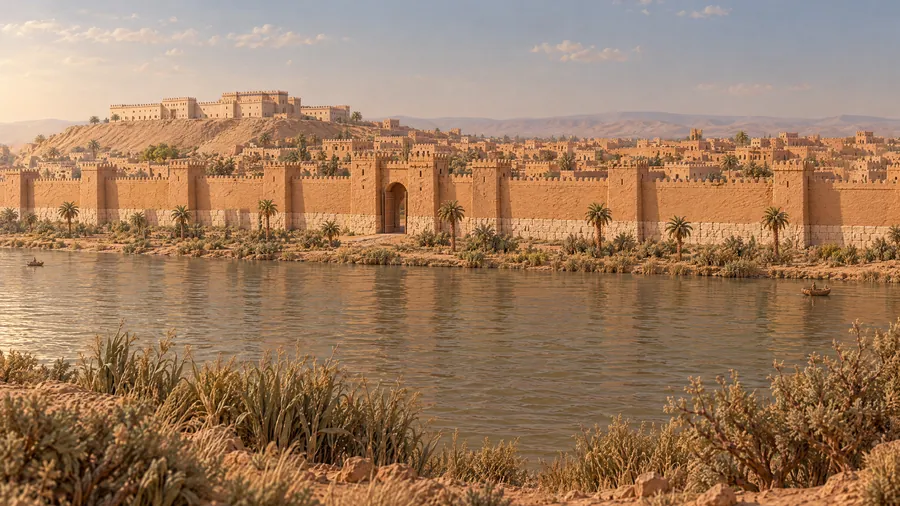
0:00Babylon, in the autumn of 539 BC. Its walls are so thick that, as the Greek historian Herodotus heard it, a four-horse chariot could turn around on top of them. Its great gate is glazed in deep blue brick, lined with bulls and dragons.
Over the river stands a temple tower you can see for miles. It looks like a city no army could take. It didn’t need to. In October, an army walks in through those gates without a battle. About two weeks later, its king enters behind it. He honors Babylon’s gods. And within a year, he will send a captive people home, and hand back the gold Babylon took from their temple. His name is Cyrus.
How did he take one of the strongest cities in the world without a fight at its gates? And why did he do what he did next? This is Cyrus the Great, the Persian king in the Bible and in history.
It’s really two stories: a city that thought it couldn’t fall, and a king from the hills who was coming for it. They meet in the autumn of 539 BC. Let’s start with the city.
The captives’ city
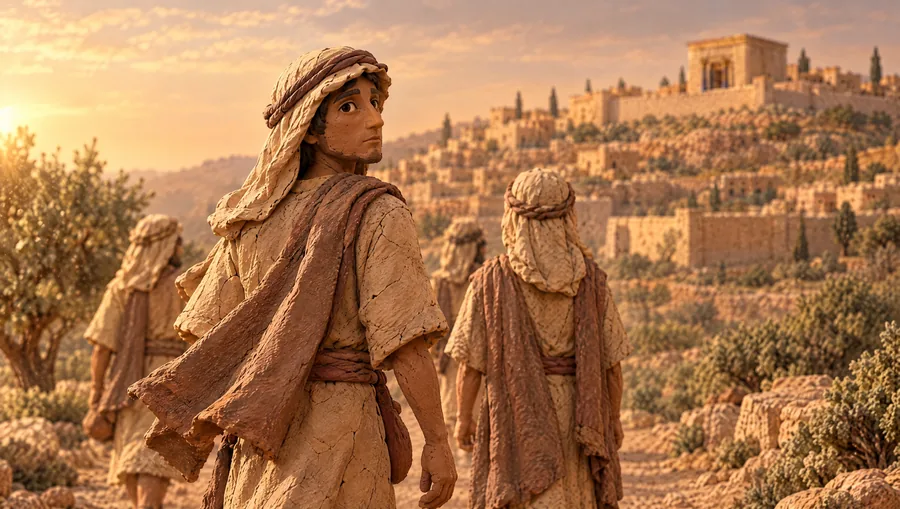
1:09In 586 BC, Babylon’s army burned Jerusalem and its temple, and marched thousands of Judeans east. One of their songs remembers it: “By the rivers of Babylon we sat and wept when we remembered Zion.” They weren’t the only thing carried east.
The Book of Daniel says Nebuchadnezzar took articles from the house of God, “to the house of his god, where he put them in the treasury of his god.” Gold and silver vessels from the Lord’s temple, in a temple to Marduk.
Hold on to those. They come back. The prophet Jeremiah had told the exiles how long to wait: “When Babylon’s seventy years are complete, I will attend to you and confirm My promise to restore you to this place.” By the 550s, Babylon’s king is Nabonidus. He gave special honor to the moon god, Sin, and spent years at the desert oasis of Tema, in Arabia, while his son Belshazzar ran Babylon.
The city’s chronicle notes, year after year, that the king did not come to Babylon, and the great New Year festival was not held. The sharpest criticism of him comes from Persian-era texts, the Cyrus Cylinder among them, which say he slighted Marduk, the city’s own god, and that Marduk’s priests were angry.
Historians handle that picture with care. And while Babylon’s king was in the desert, a small kingdom in the hills of Persia had a new king.
The king from Anshan
2:39Cyrus became king of Anshan about 559 BC. Anshan was small, and it answered to a bigger kingdom: the Medes, under King Astyages. The Greeks told a story about Cyrus’s birth. Astyages dreamed his grandson would take his throne, ordered the baby left to die, and a herdsman raised him instead.
That’s the Greek story, and it’s a legend. What’s certain comes from a Babylonian chronicle. In 550 BC, Astyages marched against Cyrus, and his own army rebelled and took him prisoner. Cyrus marched into the Median capital, Ecbatana, and carried its silver and gold home. The vassal was now master of the Medes.
Next came Lydia, the richest kingdom in the west, ruled by Croesus, whose name still means rich. Herodotus says Croesus asked an oracle whether to fight Persia, and was told that if he did, a great empire would fall. In the Greek story, one did. His own.
What we know is that about 546 BC, Croesus’s capital, Sardis, fell to Cyrus. And here’s the pattern. Assyria and Babylon carried nations away. Cyrus, in the cases we can see, let them go home. By 540, one great power stood between Cyrus and the sea: Babylon.
The night the threads meet
4:05Nabonidus was back in Babylon. As the Persians came closer, he had the statues of other cities’ gods brought inside Babylon’s walls, for safekeeping. In the autumn of 539, Cyrus came down the Tigris. At Opis, the armies met. This one was a real battle, and Babylon’s army lost.
Then the cities began to open. Sippar surrendered without a fight. Two days later, Cyrus’s general, Ugbaru, entered Babylon, and the chronicle says it plainly: without battle. Nabonidus was captured. The Greeks tell it differently. A century later, Herodotus wrote that the Persians turned the river aside and walked in along its bed while the city was celebrating a festival. And the Book of Daniel, which we followed in its own episode, says Belshazzar held a feast on Babylon’s last night, and “That very night Belshazzar king of the Chaldeans was slain.”
Daniel also names a Darius the Mede here, a puzzle we opened in that episode. The chronicle never goes inside the palace. Daniel never describes the army. They may be telling two halves of the same night. About two weeks later, Cyrus himself entered, and the chronicle says there was peace in the city. Then came what he did next, for the people Babylon had carried away.
In the Cylinder’s words
5:30We know what he wanted Babylon to hear, because it survives. In 1879, at Babylon, diggers found a clay barrel about nine inches long, covered in Babylonian writing. It’s called the Cyrus Cylinder, and it was written for him, most likely by Babylon’s own scribes. It says Marduk searched for a righteous king, took Cyrus by the hand, called him by name, and let him enter Babylon without battle. It says Cyrus returned the gods of cities east of the Tigris to their shrines, and gathered their peoples and returned them to their homes.
It even says Cyrus found an inscription of Ashurbanipal, an Assyrian king who ruled before him. Assyrian kings had sometimes sent gods home too, so this was not wholly new. Now notice what it doesn’t say. The places it lists aren’t Judah. It never names the Jews or Jerusalem. And it gives the credit to Marduk. So is it a boast or a policy?
Probably both: a king telling a city what it wanted to hear, and a king who really did send people home. The Bible tells the same year from another angle. And it names the Lord, whom the Cylinder never names.
The decree, and the list
6:46Here’s how the Book of Ezra opens: “In the first year of Cyrus king of Persia, to fulfill the word of the LORD spoken through Jeremiah, the LORD stirred the spirit of Cyrus king of Persia to send a proclamation throughout his kingdom and to put it in writing as follows:” “This is what Cyrus king of Persia says: ‘The LORD, the God of heaven, who has given me all the kingdoms of the earth, has appointed me to build a house for Him at Jerusalem in Judah.’” The same decree closes the books of Chronicles, the last book in the traditional Hebrew order.
On the Cylinder, Cyrus credits Marduk. In Ezra, he credits the Lord. Persian kings often spoke to a conquered people in its own religious language, so the wording alone can’t tell us what Cyrus himself believed. And Ezra adds what no inscription can: the Lord stirred his spirit. And now the detail I think is the most remarkable in this whole story. It’s a list.
“King Cyrus also brought out the articles belonging to the house of the LORD that Nebuchadnezzar had carried away from Jerusalem and placed in the temple of his gods.” The treasurer, Mithredath, a Persian name built on the god Mithra, counted them out to a prince of Judah named Sheshbazzar.
“In all, there were 5,400 gold and silver articles.” Remember where we left them: in the treasury of Babylon’s god. And remember Daniel’s account of that last night, when Belshazzar “gave orders to bring in the gold and silver vessels that Nebuchadnezzar his father had taken from the temple in Jerusalem, so that the king could drink from them”. Ezra’s 5,400 may well include the very cups from that feast.
Decades after they were carried east, they were counted out and sent home.
The anointed
8:40There’s one more place Cyrus appears in the Bible, and it’s the most surprising. In Isaiah, the Lord speaks of him by name: “who says of Cyrus, ‘My shepherd will fulfill all that I desire,’” And then: “This is what the LORD says to Cyrus His anointed, whose right hand I have grasped to subdue nations before him,” Anointed.
In Hebrew, mashiach, the word that gives us “messiah.” But in the Old Testament it’s used of kings set apart for a task. David called King Saul “the LORD’s anointed.” Isaiah isn’t calling Cyrus the Messiah. He’s calling him a king chosen for a job.
This channel reads these chapters as Isaiah’s, as the New Testament does. Many scholars place chapters 40 to 55 with a later prophet during the exile, partly because Cyrus is named about 150 years ahead and partly because the setting shifts to Babylon.
Others hold to one Isaiah, since the New Testament quotes both halves under his name. Then comes the line that answers our question: “I call you by name; I have given you a title of honor, though you have not known Me.”
Though you have not known Me. Nothing says Cyrus came to worship the Lord alone. The Cylinder, written for him, thanks Marduk. Isaiah says God used him anyway. The decree said go home. It didn’t say it would be easy.
Home
10:11Most of the exiles stayed in Babylon. Many had been born there. But some went. Ezra counts the first company: “The whole assembly numbered 42,360,” plus their servants and singers, walking hundreds of miles west with the temple’s gold. In Jerusalem they built the altar first.
Then, in the second year after they arrived, they laid the foundation of the new temple. The priests sounded trumpets and the people sang. “But many of the older priests, Levites, and family heads who had seen the first temple wept loudly when they saw the foundation of this temple.
Still, many others shouted joyfully.” Ezra says “The people could not distinguish the shouts of joy from the sound of weeping”. Then their neighbors “hired counselors against them to frustrate their plans throughout the reign of Cyrus king of Persia”. The work stalled.
And years later, under a later Persian king, the decree itself would have to be searched for, and it would turn up in a fortress in Media.
The plain tomb
11:19Cyrus died about 530 BC. How, we don’t know: Herodotus, Xenophon and another Greek writer, Ctesias, give three different deaths. He was buried at Pasargadae, his own capital, in a stone house on six broad steps. Two centuries later, Alexander the Great found it robbed and ordered it restored.
For a man whose empire ran from the Aegean coast deep into Central Asia, it’s a small house.
Where it points
11:50Step back to the table. Babylon’s lamp goes out, and Persia’s comes on. And the people Babylon carried away are back on their hill, building. The temple they began was finished under Darius, with the prophets Haggai and Zechariah urging them on.
Centuries later, Herod rebuilt and greatly enlarged it, and that is the temple of the Gospels, where Jesus would teach. Kings rise and fall on this table. The promise outlasted Babylon. One thing to remember: on the day they laid that foundation, with the old men weeping and the young ones shouting, this is what they sang: “For He is good; for His loving devotion to Israel endures forever.”
Babylon at dawn, in 538 BC. The gates are open. And on the road west, a long line of people carries gold back the way it came. So, was Cyrus generous, or shrewd? Ezra gives a third answer: the Lord stirred his spirit.
What do you think he was? Tell me in the comments. Next time: a few decades later, under a later Persian king, a young Jewish woman becomes queen. That’s Esther. If you’re new here, start with The Land of the Bible, or with Daniel, who was there the night Babylon fell.
Sources and further reading
The text: Psalm 137 (verse 1); Daniel 1 (verse 2), Daniel 5 (verses 2 and 30); Jeremiah 29 (verse 10); Ezra 1 (verses 1–2 and 7–11), Ezra 2 (verse 64), Ezra 3 (verses 8–13), Ezra 4 (verses 5 and 24), Ezra 5 (verse 1), Ezra 6 (verses 2–3 and 14–15); 2 Chronicles 36 (verses 22–23); Isaiah 44 (verse 28), Isaiah 45 (verses 1 and 4); 1 Samuel 24 (verse 6).
Babylon and its last king: A. K. Grayson, Assyrian and Babylonian Chronicles (the Nabonidus Chronicle, ABC 7); P.-A. Beaulieu, The Reign of Nabonidus.
The Cylinder: I. Finkel (ed.), The Cyrus Cylinder; A. Kuhrt, “The Cyrus Cylinder and Achaemenid Imperial Policy.”
Cyrus and Persia: P. Briant, From Cyrus to Alexander; A. Kuhrt, The Persian Empire; D. Stronach, Pasargadae.
The Greek writers: Herodotus, Histories 1; Xenophon, Cyropaedia; Ctesias; Arrian, Anabasis 6.29.
The Bible and history: J. N. Oswalt, The Book of Isaiah, Chapters 40–66 (NICOT); H. G. M. Williamson, Ezra, Nehemiah (WBC); D. Kidner, Ezra and Nehemiah (TOTC); K. A. Kitchen, On the Reliability of the Old Testament.
Map data
Terrain: NOAA NCEI ETOPO 2022 (doi:10.25921/fd45-gt74). Coastlines and rivers: Natural Earth. Place locations: OpenBible.info Bible Geocoding Data, CC BY 4.0.
Photo credits
Museum photos and drawings (cropped and slowly panned in the video, the drawing also tinted; our versions carry the same licenses as the originals):
- Cyrus Cylinder, British Museum: Photograph by Mike Peel (www.mikepeel.net), CC BY-SA 4.0, via Wikimedia Commons. commons.wikimedia.org/?curid=10792885
- Nabonidus Chronicle, British Museum: photo by Osama Shukir Muhammed Amin FRCP(Glasg), CC BY-SA 4.0, via Wikimedia Commons. commons.wikimedia.org/?curid=122825826
- Tomb of Cyrus, Pasargadae (Pasargad232): photo by Mahdiz, CC BY-SA 3.0, via Wikimedia Commons. commons.wikimedia.org/?curid=25951090
- Public domain via Wikimedia Commons: Cyrus Cylinder (Daderot, CC0); Ishtar Gate, Pergamon Museum (Kurt Kaiser, CC0); the Cylinder’s text, drawn by T. G. Pinches.
How this is made
Map & Lamp is animated in a handmade clay style. The story scenes are made with AI image and video tools, directed shot by shot; the maps are built in Blender from real terrain data and labeled by hand in After Effects. Scripts are drafted with AI assistance, sourced to named works, checked against the text, and reviewed and approved by the creator before release. The narration is the creator’s own voice, produced with a voice model made from his recordings. Music and sound effects are licensed library recordings, not AI-generated.
Spot something we got wrong? Write to [email protected].